





Cultural considerations in assessing visuospatial skills
Visuospatial assessment examines how people perceive relationships between objects, navigate space, recognize patterns, and construct or reproduce visual information. These abilities are central to everyday activities such as reading maps, organizing belongings, interpreting diagrams, and moving safely through an unfamiliar environment.
Performance on a visuospatial task, however, is shaped by more than brain function. Language, schooling, technology use, artistic conventions, living environments, and familiarity with testing procedures can influence how a person understands instructions and approaches a problem. Cultural context is therefore essential when interpreting results.
The 2018 International Neuropsychological Society meeting in Prague emphasized the connection between scientific advances, clinical practice, and humane care. That perspective remains valuable for clinicians who want assessment findings to reflect genuine neuropsychological abilities rather than cultural distance from the test itself.
Why culture matters in visual assessment
Many visuospatial measures appear language-light, yet they still contain cultural assumptions. A drawing task may depend on experience with pencils, geometric figures, or formal classroom exercises. A route-finding activity may favor people accustomed to maps, elevators, public transit diagrams, or dense urban environments.
Normative data also carry cultural meaning. A score is usually compared with a reference group matched by age, education, and sometimes geographic region. If the examinee’s cultural, linguistic, or educational background differs substantially from that group, a low score may indicate limited test familiarity rather than impaired spatial processing.
What these tasks actually measure
Visuospatial performance includes several related processes: visual perception, mental rotation, spatial working memory, constructional ability, visual attention, and executive planning. A person may perform well on object matching but struggle with complex copying because planning, motor control, or sustained attention adds difficulty.
Clinicians should therefore examine error patterns instead of relying on a single total score. Rotations, omissions, distorted proportions, poor organization, and impulsive responses suggest different underlying mechanisms. Asking the person to describe their strategy can reveal whether an unfamiliar format, misunderstood instruction, or genuine cognitive difficulty affected performance.
Reading scores across backgrounds
Education is particularly important. Formal schooling often provides repeated practice with diagrams, geometry, writing systems, and timed problem-solving. Someone with limited or interrupted education may have intact spatial reasoning but less experience with the conventions used in standardized neuropsychological tests.
Language can influence results even when the stimulus is visual. Instructions involving terms such as “beside,” “behind,” “opposite,” or “clockwise” may be interpreted differently across languages. When working with multilingual patients, qualified interpreters, translated instructions, and careful documentation of the language used during testing can improve validity. Research on pediatric stroke neuropsychological outcomes also illustrates why developmental history and context must accompany test scores.
| Assessment feature | Possible cultural influence | More careful interpretation |
|---|---|---|
| Figure copying | Schooling and drawing experience | Review organization, planning, and motor demands |
| Mental rotation | Familiarity with diagrams and visual puzzles | Compare strategies and response patterns |
| Route learning | Experience with maps, signs, or urban navigation | Ask about everyday navigation habits |
| Spatial vocabulary | Differences in language and directional terms | Check comprehension before scoring |
| Timed construction | Test-taking norms and speed expectations | Consider accuracy, effort, and pacing together |
Building a culturally responsive evaluation
A strong evaluation begins before formal testing. Gather information about the person’s first language, migration history, educational opportunities, occupation, visual habits, and daily responsibilities. A craft worker, driver, engineer, caregiver, or person who rarely uses written maps may display different real-world strengths that are not equally represented in a test battery.
Use multiple sources of evidence when possible. Behavioral observations, functional history, informant reports, nonverbal reasoning tasks, and performance-based activities can clarify whether a result is consistent across settings. Interpreters should receive guidance about preserving instructions without adding explanations that change task demands.
Connecting findings to patient care
Assessment becomes clinically meaningful when it explains how a person functions in daily life. A patient may struggle with crowded visual scenes, unfamiliar buildings, or assembling objects while retaining strong performance in familiar routines. Recommendations should identify the environmental demands that create difficulty and the supports that can reduce risk.
Cultural humility also affects communication. Families may describe spatial problems through practical concerns rather than clinical terms, such as getting lost in a market, misjudging distances, or arranging household items incorrectly. Listening carefully to these examples helps clinicians connect test behavior with lived experience. Professionals attending meetings in Prague can also find practical venue information through Hotel Ankora, reflecting the conference’s attention to accessibility and participation beyond the lecture room.
Practical safeguards for fair interpretation
Culturally informed assessment does not mean abandoning standardized measures. It means using them thoughtfully, identifying limits in the normative comparison, and integrating results with history and observation. The following practices support more equitable conclusions:
- Confirm that instructions and directional language are understood before beginning.
- Record language, education, visual experience, and relevant cultural factors.
- Analyze qualitative errors and problem-solving strategies, not just percentile ranks.
- Select supplementary measures that reduce unnecessary language or schooling demands.
- Explain findings in functional terms that are meaningful to the patient and family.
These safeguards are especially important in pediatric, cross-cultural, and rehabilitation settings, where development, acculturation, medical history, and family expectations may all affect performance. A transparent report should distinguish observed ability from factors that may have limited the validity of the score.
Clinicians, researchers, and students can continue this work by reviewing conference programs, clinical discussions, and research resources that connect neuroscience with compassionate practice. Use those materials to refine assessment choices, question inherited assumptions, and make visuospatial evaluation more accurate for the diverse people it is intended to serve.
General Information
Important information about the meetingIndustry
Support and exhibition opportunitiesCzech Republic
Beautiful country situated in the very heart of EuropeContact
How can we help you?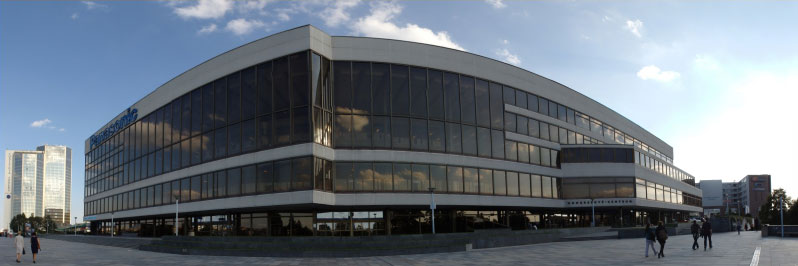
Prague Congress Centre (KCP)
5.května 65140 21 Prague 4
Czech Republic
Phone: +420 261 171 111
Website: www.kcp.cz