



Cognitive reserve and resilience in neurodegenerative disease
Neurodegenerative disorders do not affect every brain in the same way. People with comparable levels of amyloid, tau, vascular damage, or neuronal loss can show strikingly different cognitive symptoms and daily functioning. This variation has made cognitive reserve and resilience central concepts in modern neuropsychology.
Cognitive reserve describes the brain’s ability to use efficient or flexible strategies to manage pathology. Resilience is closely related, but often emphasizes the capacity to maintain adaptation, recover function, or draw on support when neurological damage progresses. Together, these ideas connect neuroscience with assessment, rehabilitation, prevention, and humane clinical care.
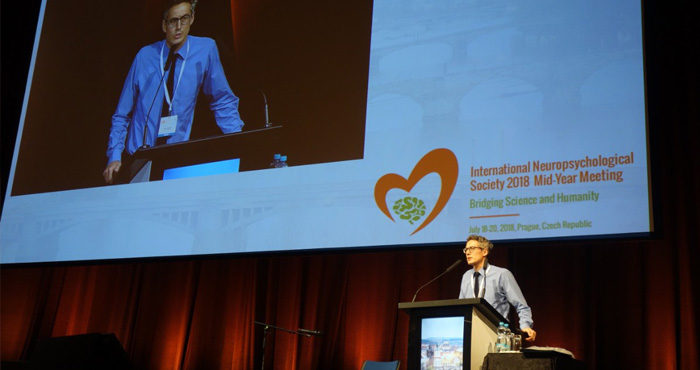
The subject also reflects the broad aims of the INS 2018 meeting site, which brought scientific advances into conversation with clinical practice, culture, and patient-centered care. Its Prague program provided a useful setting for considering how evidence about brain aging can inform real decisions.
What cognitive reserve means in practice
Reserve is not a single trait that can be measured directly. It is an explanatory model for why education, occupational complexity, literacy, bilingualism, social engagement, and intellectually stimulating activities may influence the relationship between brain pathology and observed performance. These experiences may support more efficient neural networks or provide alternative routes for completing a task.
Researchers often distinguish cognitive reserve from brain reserve. Brain reserve refers more closely to structural resources, such as brain volume or synaptic count, whereas cognitive reserve concerns how effectively available resources are used. The distinction is useful, although the two processes overlap throughout the lifespan.
Resilience across neurodegenerative conditions
In Alzheimer’s disease, reserve may help explain why some individuals remain functionally independent despite substantial pathological burden. In Parkinson’s disease, resilience can influence the effects of executive dysfunction, slowed processing, mood symptoms, and motor limitations. Similar principles are being studied in frontotemporal dementia, multiple system atrophy, and dementia with Lewy bodies.
Resilience is dynamic rather than permanently fixed. Sleep quality, physical activity, depression, hearing loss, medication burden, social isolation, and cardiovascular health can either strengthen or weaken a person’s ability to cope. A resilient presentation should therefore never be interpreted as evidence that disease is absent or unimportant.
Measuring reserve without oversimplifying people
Neuropsychological assessment usually approaches reserve indirectly. Questionnaires may estimate educational attainment, work demands, reading habits, or lifelong cognitive activity. A person’s expected level of performance can then be compared with actual test results, though this method depends heavily on the quality and cultural fairness of the norms.
Assessment should also examine everyday function, informant reports, language background, socioeconomic opportunity, and health history. Years of formal education are an imperfect proxy: access to schooling differs across generations and countries, while practical expertise and community knowledge may be overlooked. Culturally responsive interpretation is essential.
| Domain | Possible protective resource | Clinical implication |
|---|---|---|
| Education and literacy | Stronger learned strategies and knowledge networks | Interpret scores in relation to educational opportunity |
| Occupation | Complex problem-solving and adaptive routines | Explore transferable skills during rehabilitation |
| Social engagement | Communication, motivation, and emotional support | Include relationships in care planning |
| Physical health | Better vascular and metabolic stability | Address modifiable risk factors |
| Daily activity | Repeated practice and environmental structure | Build compensatory routines around preserved abilities |
Turning reserve into a clinical resource
A diagnosis should not be reduced to a predicted decline curve. Clinicians can identify preserved abilities, preferred routines, meaningful roles, and situations in which the person performs well. These strengths may guide memory notebooks, electronic reminders, errorless learning, environmental cues, or simplified task sequences.
Intervention should be tailored to the individual’s cognitive profile. Someone with strong verbal learning may benefit from written compensatory strategies, while another person may respond better to visual prompts or procedural practice. Family members can reinforce these approaches by keeping instructions consistent and reducing unnecessary distractions.
Prevention and lifestyle in the real world
Evidence linking lifestyle to brain health supports practical attention to exercise, blood pressure, diabetes management, sleep, hearing, nutrition, and social connection. These factors should be framed as accessible health targets rather than guarantees against dementia. Reserve may be strengthened across adulthood, but no single activity can eliminate neurodegenerative risk.
Programs are most credible when they account for barriers such as poverty, disability, transport, caregiving duties, and limited access to services. The cultural setting matters as well; information about local customs, public transport, and community resources can shape whether recommendations are realistic. The Czech Republic resources associated with the Prague meeting illustrate how place and practical access belong in discussions of health and participation.
Practical priorities for neuropsychological care
A reserve-informed approach works best when it combines test data with personal history and functional observation. It should preserve autonomy while acknowledging safety concerns, and it should communicate uncertainty without removing hope or urgency.
Clinicians, researchers, and families can apply the following priorities:
- Interpret cognitive scores alongside education, language, culture, occupation, and premorbid ability.
- Identify preserved skills that can support compensation and meaningful participation.
- Address modifiable contributors such as sleep disruption, depression, hearing loss, vascular risk, and inactivity.
- Include caregivers in strategy training while protecting the patient’s preferences and decision-making role.
- Reassess function over time rather than treating a single evaluation as a permanent forecast.
The most useful model of reserve is therefore flexible and person-centered. It recognizes biological vulnerability while giving equal attention to learning history, relationships, environment, and adaptation. Continue exploring this evidence through neuropsychological research and translate it into individualized assessment and care for people living with neurodegenerative disease.
General Information
Important information about the meetingIndustry
Support and exhibition opportunitiesCzech Republic
Beautiful country situated in the very heart of EuropeContact
How can we help you?
Prague Congress Centre (KCP)
5.května 65140 21 Prague 4
Czech Republic
Phone: +420 261 171 111
Website: www.kcp.cz