



How culture shapes performance on frontal lobe tests
Frontal lobe tests are often presented as objective measures of executive function, yet performance is shaped by far more than neural efficiency. Language, schooling, social expectations, test familiarity, and cultural ideas about authority can all influence how a person approaches inhibition, planning, flexibility, and problem-solving tasks.
This matters in neuropsychological assessment because a low score may reflect limited cultural fit rather than frontal-system impairment. A person unfamiliar with timed puzzles, abstract instructions, or individual competition may appear inattentive or inflexible when the real issue lies in the testing context.
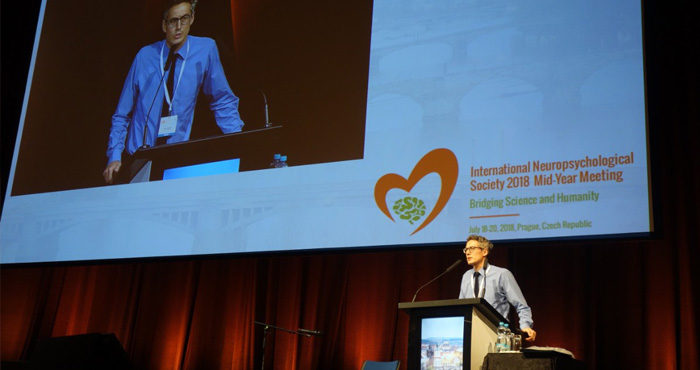
The 2018 International Neuropsychological Society meeting in Prague emphasized the value of connecting neuroscience with humane clinical care. That principle is especially important when interpreting executive-function results across countries, languages, and communities.
Executive functions are expressed through culture
Frontal systems support broadly shared abilities, including working memory, response inhibition, cognitive flexibility, and goal management. However, these abilities are expressed through learned behaviors. Cultural background can influence whether a person is encouraged to speak quickly, challenge an instruction, multitask, or pause before responding.
For example, verbal fluency tasks depend on vocabulary, literacy, phonological structure, and the frequency with which a person uses the tested language. A bilingual adult may retrieve words more slowly in a second language while showing intact executive control in daily life. Naming conventions and educational experience can further affect category fluency.
Language changes the testing experience
Instructions for trail-making, problem-solving, and set-shifting tasks may contain subtle linguistic demands. Long sentences, unfamiliar idioms, grammatical complexity, or translated terminology can increase cognitive load before the actual executive process begins.
Translation alone does not guarantee equivalence. A carefully adapted test should preserve difficulty, response demands, and cultural meaning rather than simply replace words. Research on Wechsler adaptations illustrates why international assessment requires attention to norms, language, and interpretation.
Education and test familiarity influence scores
Years of formal education are strongly associated with performance on many frontal lobe measures. Schooling provides practice with sustained attention, rule discovery, written instructions, categorization, and rapid symbol manipulation. Consequently, an adult with limited educational opportunity may score poorly on executive tasks without having a neurological disorder.
Test familiarity also matters. In some settings, people rarely encounter timed paper-and-pencil activities or tasks that require guessing a strategy after an error. A cautious response style may be adaptive in everyday life but interpreted as reduced initiation in a laboratory measure.
| Assessment feature | Possible cultural influence | Safer interpretive approach |
|---|---|---|
| Verbal fluency | Language dominance, vocabulary, literacy | Compare language-matched norms and examine error patterns |
| Trail-making tasks | Schooling, symbol familiarity, visual conventions | Document education and explain the task carefully |
| Stroop-style inhibition | Color terms, language structure, speed expectations | Use culturally appropriate materials and caution with reaction time |
| Wisconsin-style sorting | Experience with abstract rules and examiner feedback | Observe strategy, learning, and frustration tolerance |
| Planning tasks | Familiarity with puzzles and individual problem-solving | Combine scores with functional history and behavioral observation |
Social norms shape behavior during testing
The relationship between examiner and patient can affect executive-test performance. In cultures that emphasize deference to professionals, a patient may avoid asking for clarification, admit confusion, or challenge an apparently incorrect premise. A quiet or compliant style can be mistaken for passivity, poor self-monitoring, or diminished initiation.
Expectations about eye contact, emotional expression, and acceptable mistakes also differ. Some patients may take longer because they are carefully checking answers, while others may respond rapidly to demonstrate cooperation. The examiner should distinguish culturally shaped interaction patterns from behaviors that consistently indicate frontal dysfunction.
Norms should reflect the person’s context
The strongest interpretation combines demographically appropriate norms with an understanding of migration history, acculturation, language proficiency, and educational quality. “Years of education” may conceal major differences between rural and urban schools, interrupted schooling, literacy level, and opportunities for advanced study.
Clinicians should also establish which language is most comfortable for formal testing and everyday functioning. A patient who performs poorly in the assessment language but manages finances, navigation, work routines, and family responsibilities effectively in another language may require a different explanation than a patient with broad executive decline.
Better interpretation combines methods
No single frontal lobe test can capture the complexity of executive functioning. Performance-based measures should be integrated with interviews, informant reports, occupational history, observation, and culturally relevant functional examples. Everyday difficulties with budgeting, medication management, planning travel, or adapting to change often provide more meaningful evidence than an isolated score.
A culturally responsive assessment also records the conditions under which the test was administered. Note interpreter use, fatigue, anxiety, unfamiliar materials, language switching, sensory limitations, and the patient’s understanding of the task. These details help prevent cultural variation from being mislabeled as brain disease.
Practical steps for culturally responsive assessment
Clinicians can strengthen cross-cultural neuropsychological practice by:
- Selecting translated tests with published reliability and local normative evidence.
- Matching the testing language to the patient’s proficiency, not simply their country of origin.
- Documenting education quality, literacy, migration, occupation, and acculturation.
- Using behavioral observations and functional history alongside quantitative scores.
- Explaining results in plain language while acknowledging uncertainty and cultural context.
When these safeguards are applied, frontal lobe assessment becomes more accurate and more humane. It can identify genuine executive impairment without treating difference in language, learning history, or social behavior as pathology.
Use the INS 2018 perspective as a reminder to connect scientific rigor with patient-centered interpretation. In clinical practice, build culturally informed assessment into every stage of testing, from selecting measures to communicating results and planning care.
General Information
Important information about the meetingIndustry
Support and exhibition opportunitiesCzech Republic
Beautiful country situated in the very heart of EuropeContact
How can we help you?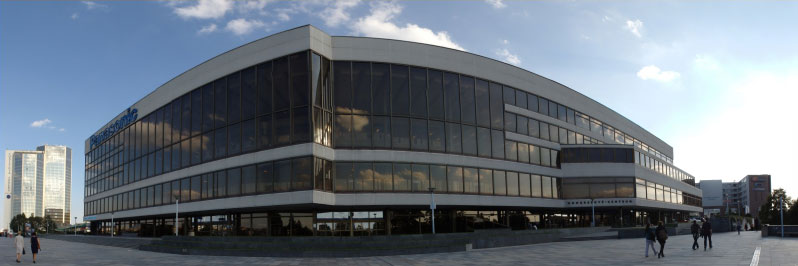
Prague Congress Centre (KCP)
5.května 65140 21 Prague 4
Czech Republic
Phone: +420 261 171 111
Website: www.kcp.cz