



Rethinking Social Cognition Assessment in Dementia
Dementia assessment has traditionally emphasized memory, language, attention, and executive function. These domains remain essential, yet they do not fully explain why a person may misread a caring gesture, lose conversational tact, or respond inappropriately to another person’s emotions. Social cognition offers a broader view of how neurological change affects relationships and everyday decision-making.
Assessing these abilities requires more than asking whether someone can identify a facial expression. Clinicians must consider emotion recognition, theory of mind, empathy, social judgment, conversational inference, and the influence of culture. A sensitive approach can distinguish cognitive impairment from hearing loss, depression, aphasia, unfamiliar social conventions, or limited educational opportunity.
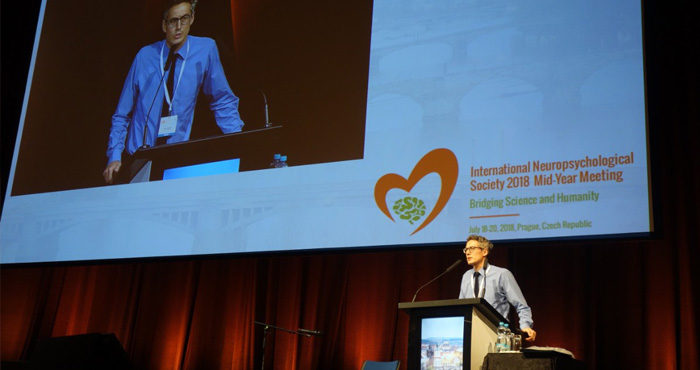
The scientific and clinical focus associated with the INS 2018 meeting in Prague reflected this need to connect neuroscience with humane patient care. Its emphasis on cultural considerations and clinical practice provides a useful framework for evaluating social behavior without reducing a person’s identity to a test score.
Why Social Cognition Matters
Social cognition helps people interpret intentions, understand emotional signals, adjust behavior, and maintain reciprocal relationships. Changes in these processes may appear early in some dementias and can be especially prominent in frontotemporal disorders, although Alzheimer’s disease and vascular cognitive impairment may also affect social functioning.
Everyday consequences can include suspiciousness, impulsive comments, reduced empathy, difficulty following conversational turns, or failure to recognize sarcasm. These behaviors are often described broadly as “personality change,” but a structured assessment can reveal which component is impaired and what support may be effective.
Moving Beyond Recognition Tasks
A person may correctly label a happy or angry face in a quiet clinic while struggling to interpret several competing cues in a family conversation. For this reason, assessment should combine structured measures with ecologically valid tasks, caregiver observations, and clinical interviews.
Useful methods include emotion-matching exercises, short stories that test mental-state reasoning, interpretation of social faux pas, video-based conversations, and role-play. Performance should be compared with the individual’s premorbid communication style whenever reliable history is available, rather than judged against stereotypes about age or diagnosis.
Comparing Assessment Methods
Different tools answer different clinical questions. No single measure captures the full range of social understanding, and apparent weaknesses may reflect language comprehension, visual perception, working memory, or cultural unfamiliarity.
| Assessment approach | Primary ability examined | Strength | Important limitation |
|---|---|---|---|
| Emotion recognition tasks | Identifying facial or vocal affect | Quick and easy to standardize | May poorly represent natural interaction |
| Theory-of-mind stories | Inferring beliefs and intentions | Clarifies mental-state reasoning | Language demands can distort results |
| Social judgment vignettes | Detecting inappropriate behavior | Relevant to daily conduct | Responses may depend on cultural norms |
| Video or role-play tasks | Applying skills in context | More ecologically valid | Requires careful scoring and training |
| Caregiver-based measures | Observed behavior across settings | Captures functional change | Informant bias and burden may affect accuracy |
A balanced battery should include at least one controlled task and one real-world or informant-based measure. Interpreting the pattern is often more informative than focusing on a single low score. For example, intact emotion recognition alongside poor social inference may suggest a different support plan from generalized perceptual difficulty.
Culture, Language, And Communication
Social behavior is shaped by culture, community expectations, family roles, and language. Eye contact, emotional expressiveness, personal space, humor, and conversational directness do not have identical meanings across populations. Normative data drawn from one cultural group can therefore produce misleading conclusions when applied without adaptation.
Language impairment also requires careful consideration. A person with aphasia may understand another person’s emotional state but be unable to explain that understanding verbally. Clinicians should use simplified instructions, visual response formats, gesture, and supported conversation when appropriate. Related work on aphasia recovery research reinforces the value of connecting language science with practical communication support.
Linking Behavior With Brain Systems
Neuropsychological interpretation benefits from linking observed behavior to distributed brain networks rather than assigning social cognition to a single region. The orbitofrontal cortex, anterior temporal lobes, amygdala, insula, medial prefrontal areas, and connected white-matter pathways all contribute to affective and social processing.
Patterns of performance may help clinicians formulate hypotheses about disease progression and care needs. However, test results should not be treated as a substitute for neurological examination or functional history. Neuroimaging, cognitive testing, caregiver reports, and observations from occupational or speech-language therapy are most useful when interpreted together.
Building A Clinically Useful Profile
A practical evaluation should identify what happens, when it happens, and who is affected. A caregiver may report that a patient behaves appropriately in familiar routines but becomes overwhelmed in noisy gatherings. That distinction can guide environmental changes more effectively than a general label such as “poor judgment.”
Clinicians can strengthen assessment by using the following practices:
- Establish the person’s previous communication style, cultural background, and social roles.
- Separate social-cognitive difficulty from hearing, vision, language, mood, and executive-function problems.
- Combine standardized measures with caregiver reports and observation in meaningful situations.
- Repeat selected measures over time to track progression and response to intervention.
- Translate findings into specific strategies for families, staff, and community activities.
Feedback should describe abilities as well as limitations. A patient who struggles with sarcasm may still respond well to direct language, visual cues, and predictable routines. Families benefit when recommendations explain how to prevent misunderstandings without portraying the person as intentionally rude or uncaring.
Assessment becomes most valuable when it changes care. Teams can use the profile to adapt conversations, reduce overstimulation, plan supervision, and preserve opportunities for social participation. Researchers can improve future tools by including culturally diverse samples and tasks that reflect genuine interaction.
Clinicians, researchers, and caregivers can carry this work forward by treating social behavior as measurable, contextual, and deeply human. Applying a multidimensional assessment in everyday practice can make dementia care more accurate, respectful, and responsive.
General Information
Important information about the meetingIndustry
Support and exhibition opportunitiesCzech Republic
Beautiful country situated in the very heart of EuropeContact
How can we help you?
Prague Congress Centre (KCP)
5.května 65140 21 Prague 4
Czech Republic
Phone: +420 261 171 111
Website: www.kcp.cz