




Advanced Statistical Methods In Neuropsychology
The International Neuropsychological Society mid-year meeting in Prague, held from July 18–20, 2018, brought together scientific discovery and humane patient care. Its workshop program offered a practical setting for clinicians, researchers, and students to examine how modern quantitative methods can improve assessment, diagnosis, and rehabilitation.
Advanced statistical methods are especially valuable in neuropsychology because patient data are complex. Cognitive profiles may include correlated outcomes, missing observations, repeated testing, cultural variation, and substantial differences between individuals. A rigorous analytical framework helps researchers respect that complexity instead of reducing it to a single score.
The workshop theme also reflected the broader purpose of INS 2018: connecting neuroscience with clinical practice. Participants could explore statistical modeling while keeping interpretation, communication, and patient welfare at the center of their work.
Why Advanced Methods Matter
Traditional group comparisons remain useful, but they cannot answer every contemporary research question. Neuropsychologists increasingly work with longitudinal datasets, multimodal biomarkers, normative samples, and outcomes collected across several settings. These designs call for methods that can represent change, uncertainty, and individual variation.
Multilevel models, structural equation modeling, Bayesian estimation, and latent variable techniques can reveal patterns that simpler analyses may overlook. Used carefully, they support stronger conclusions about cognitive development, neurological disease, treatment response, and everyday functioning.
From Design To Data
Sound analysis begins before data collection. Researchers need to define outcomes, identify potential confounders, estimate a realistic sample size, and determine how missing data will be handled. A sophisticated model cannot repair unclear hypotheses or inconsistent measurement.
Workshop discussions could also connect statistical reasoning with culturally informed assessment. Norms, language, education, and socioeconomic context influence neuropsychological performance. Including these variables thoughtfully can improve validity without treating cultural background as a nuisance factor.
Comparing Analytical Approaches
Different methods answer different questions. The best choice depends on the design, the measurement scale, the structure of the data, and the interpretation required by clinicians or policymakers.
| Method | Useful For | Key Strength | Common Caution |
|---|---|---|---|
| Multilevel modeling | Repeated measures and clustered samples | Represents individual and group variation | Requires careful specification of random effects |
| Structural equation modeling | Latent abilities and linked pathways | Tests measurement and theoretical models together | Can become difficult to identify or interpret |
| Bayesian analysis | Small samples and uncertain parameters | Expresses uncertainty through probability distributions | Results depend on transparent prior choices |
| Machine learning | Prediction and classification | Handles complex, high-dimensional patterns | Prediction may not explain clinical mechanisms |
| Missing-data modeling | Incomplete longitudinal records | Reduces bias from systematic dropout | Assumptions about missingness must be examined |
Interpreting Results Clinically
Statistical significance is only one part of a meaningful result. Effect sizes, confidence or credible intervals, predictive accuracy, and clinical thresholds help determine whether a finding matters for an individual patient. A small average difference may have little practical value, while a modest predictor could still improve treatment planning.
Clear visualization is equally important. Trajectory plots, predicted probabilities, and individual-level estimates can make complex models accessible to clinicians and families. Reports should explain what the model supports, what remains uncertain, and how the findings relate to real-world functioning.
Learning Across Disciplines
A workshop on advanced quantitative analysis benefits from varied perspectives. Neuropsychologists contribute knowledge of assessment and patient care, statisticians clarify assumptions and model behavior, and neuroscientists connect observed patterns with biological mechanisms. This exchange helps prevent technical methods from becoming detached from clinical meaning.
Attendees preparing for INS 2018 could review workshop strategies before arriving in Prague. Bringing a focused research question, a concise description of the dataset, and a list of analytical concerns would make discussions more productive and easier to translate into later projects.
Practical Preparation For Researchers
A focused preparation routine can help participants gain more from an intensive methods session:
- State the primary research question in one clear sentence.
- Identify the outcome variable, predictors, and likely sources of dependence.
- Bring a simple diagram of the proposed analysis or causal pathway.
- Review assumptions involving missing data, measurement reliability, and sample size.
- Separate exploratory analyses from confirmatory tests before interpreting results.
Researchers should also prepare to explain their findings to non-specialists. Statistical expertise becomes clinically valuable when results can be communicated without unnecessary jargon and linked to decisions about assessment, intervention, prognosis, or service design.
Carrying The Methods Forward
The Prague meeting represented a continuing effort to connect methodological progress with respectful, culturally responsive care. Advanced modeling is most useful when it strengthens evidence while preserving attention to the person behind every dataset.
Use the workshop principles to refine study designs, examine assumptions, and report uncertainty with care. Applying these practices across neuropsychological research can help turn sophisticated analysis into clearer evidence and more humane clinical decisions.
General Information
Important information about the meetingIndustry
Support and exhibition opportunitiesCzech Republic
Beautiful country situated in the very heart of EuropeContact
How can we help you?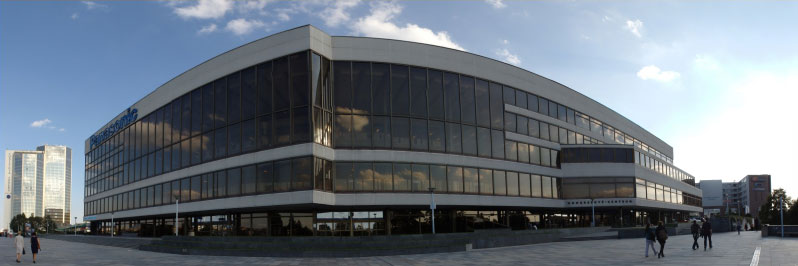
Prague Congress Centre (KCP)
5.května 65140 21 Prague 4
Czech Republic
Phone: +420 261 171 111
Website: www.kcp.cz