



Cognitive Training And Healthy Aging: What Evidence Shows
Cognitive training in healthy aging refers to structured practice designed to strengthen mental abilities such as memory, attention, processing speed, reasoning, or executive control. It ranges from repeated exercises on a computer to strategy instruction, group problem-solving, and everyday activities that require planning and recall.
Interest in these programs has grown as populations age and researchers seek practical ways to preserve cognitive function. The central question, however, is not whether people improve at the exercises they practice. It is whether those gains transfer to untrained abilities, daily independence, and meaningful quality of life.
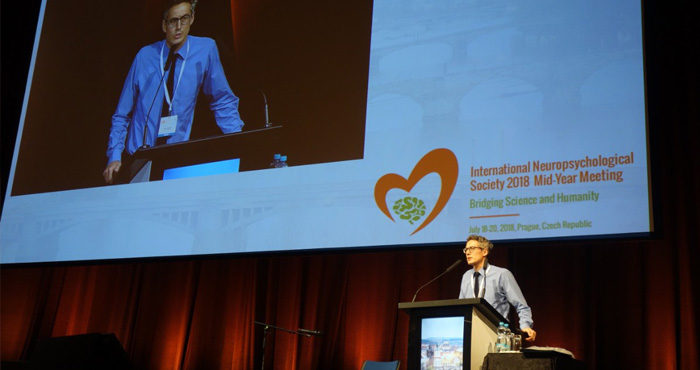
The 2018 International Neuropsychological Society meeting in Prague placed scientific progress alongside humane care and clinical application. Its archived meeting schedule reflects the wider research environment in which cognitive rehabilitation, neuroscience, and cultural considerations were discussed together.
What Cognitive Training Targets
Memory programs may teach participants to group information, create visual associations, or use external reminders. Attention exercises often involve detecting targets, switching between rules, or resisting distraction. Processing-speed tasks typically require rapid visual discrimination, while reasoning programs use patterns, sequences, and problem-solving challenges.
These approaches should not be treated as interchangeable. A person can become faster at a practiced task without showing broad improvements in memory or judgment. The training dose, difficulty level, feedback, social setting, and starting ability all influence the outcome.
How Strong Is The Evidence
Randomized trials generally find small to moderate improvements in the abilities directly trained. Benefits can remain detectable for months, especially when participants receive booster sessions or continue using learned strategies. The most consistent findings often concern processing speed, attention, and specific memory skills.
Evidence for far transfer is less settled. Improvements in laboratory measures do not automatically produce better medication management, financial decisions, mobility, or social functioning. Reviews also differ in how they define “successful aging,” select control groups, and measure outcomes, making direct comparison difficult.
Research involving mild cognitive impairment deserves separate interpretation from research with cognitively healthy adults. A related discussion of MCI findings helps clarify why risk status, diagnosis, and treatment goals should not be collapsed into one category.
Transfer Beyond The Exercise
Transfer is strongest when the trained skill resembles the real-world activity. Strategy-based memory instruction may help someone remember appointments if practice includes calendars, routines, and realistic distractions. Executive-function training may be more useful when it incorporates planning a journey, organizing tasks, or handling competing demands.
Researchers also distinguish near transfer from far transfer. Near transfer means improvement on a similar but unfamiliar task; far transfer means changes in broader cognition or everyday behavior. Claims of dementia prevention require especially careful evidence because cognitive performance is affected by education, sleep, mood, physical health, sensory loss, and social engagement.
| Approach | Main target | Potential benefit | Common limitation |
|---|---|---|---|
| Memory strategy training | Encoding and recall | Better use of mnemonics and reminders | Limited generalization without daily-life practice |
| Processing-speed exercises | Rapid visual attention | Faster performance on related tasks | Gains may be task-specific |
| Executive-function practice | Planning and flexibility | Improved switching and problem-solving | Results vary with complexity and adherence |
| Multidomain programs | Several cognitive abilities | Broader engagement and health behavior support | Hard to identify which element caused change |
| Group-based activities | Cognition and social participation | Motivation, communication, and adherence | Effects may reflect social contact as much as training |
Who Benefits And Why
Older adults do not begin training from the same cognitive, medical, or social position. People with stronger baseline performance may have more capacity to learn complex strategies, while those with lower scores may show meaningful functional gains from simpler supports. Education, language, culture, hearing, vision, and familiarity with technology can affect both access and results.
Motivation is another major factor. Programs that feel relevant, appropriately challenging, and socially rewarding are more likely to be completed. Excessive difficulty can produce frustration, whereas repetitive tasks with no visible purpose may reduce engagement. Individual assessment helps match training to ability and personal goals.
Designing Humane Effective Programs
A clinically responsible program treats cognitive performance as one part of a person’s life rather than as a score to be optimized. Trainers should explain realistic benefits, monitor fatigue and mood, protect privacy, and avoid presenting commercial software as a guaranteed shield against dementia.
Useful design principles include:
- Set goals tied to daily activities, independence, or participation.
- Combine practice with explicit strategies for real-world transfer.
- Adjust difficulty so tasks remain challenging without becoming discouraging.
- Include accessible formats for sensory, language, and mobility needs.
- Measure cognition alongside confidence, adherence, and everyday function.
Physical activity, sleep improvement, hearing correction, vascular-risk management, and social connection may complement cognitive exercises. A multidomain approach is often more plausible than relying on a single digital task, although each component still requires appropriate evaluation.
Interpreting Results With Care
An evidence review should examine the control condition, sample size, follow-up period, outcome measures, and dropout rate. An active control group can reveal whether benefits arise from cognitive practice specifically or from attention, expectation, novelty, and social interaction. Long-term maintenance is especially important because short-term post-test gains may fade.
Clinicians should also distinguish statistical significance from practical importance. A measurable change may not be large enough to affect independence, while a modest gain in confidence or routine management can still matter to an individual. Ethical communication means acknowledging uncertainty without dismissing potentially useful support.
The most defensible position is balanced: cognitive training can improve practiced and closely related abilities, but broad protection against age-related decline remains unproven. It works best as one element in personalized healthy-aging care, not as a substitute for medical evaluation or a guarantee of preserved cognition.
From Research To Everyday Care
Future studies should use culturally diverse samples, meaningful functional outcomes, longer follow-up, and transparent comparisons with other forms of mental and social activity. Researchers also need to report who benefits, who disengages, and whether improvements remain after supervised sessions end.
Professionals and families can use the current evidence to choose realistic goals, favor accessible programs, and track changes that matter in daily life. Explore the meeting’s neuropsychology resources and apply these principles when evaluating a cognitive-training option for an older adult.
General Information
Important information about the meetingIndustry
Support and exhibition opportunitiesCzech Republic
Beautiful country situated in the very heart of EuropeContact
How can we help you?
Prague Congress Centre (KCP)
5.května 65140 21 Prague 4
Czech Republic
Phone: +420 261 171 111
Website: www.kcp.cz