




INS 2018 poster presentation tips for success
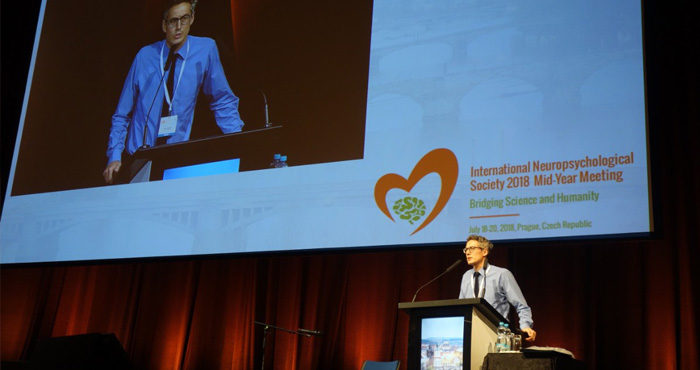
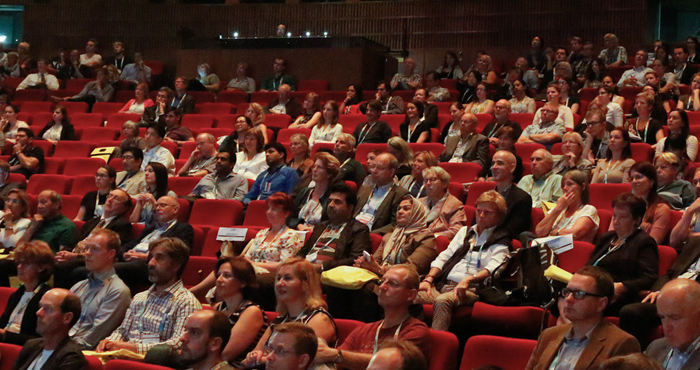
A strong scientific poster turns a complex research project into a clear visual story. At the INS 2018 mid-year meeting in Prague, presenters had an opportunity to share findings with neuropsychologists interested in neuroscience, clinical practice, cultural context, and humane patient care.
The best poster is designed for conversation rather than silent reading. Attendees should understand the research question within seconds, identify the main result quickly, and find enough methodological detail to support a productive discussion.
Preparation also matters beyond the printed display. A concise spoken explanation, thoughtful responses to questions, and respect for different clinical and cultural perspectives can make a poster session especially valuable.
Define the message before designing
Begin with one sentence that expresses the central finding or practical implication of the study. This statement should guide the title, figures, section order, and brief verbal pitch. If several results compete for attention, decide which one is most relevant to the meeting audience.
A poster about neurocognitive outcomes, for example, may include many measures, participant characteristics, and statistical comparisons. Select the evidence that supports the main argument, then move secondary analyses into a smaller section or supplementary handout.
Keep the research question visible near the top. Readers should not have to infer the purpose from a dense abstract or search through multiple paragraphs of background information.
Build a readable visual hierarchy
Use short headings such as “Research question,” “Methods,” “Key finding,” and “Clinical meaning” to create a natural reading path. Large type, generous spacing, and strong contrast are more useful than decorative graphics or excessive color.
Figures should carry the main explanatory burden. Choose charts that match the data, label axes clearly, and include units, sample sizes, and uncertainty where appropriate. Avoid tiny legends and unnecessary three-dimensional effects, both of which slow interpretation.
A poster session moves quickly, so limit blocks of prose. Replace long methodological descriptions with concise sentences, diagrams, or a participant-flow graphic. Every visual element should help explain the study rather than fill empty space.
Balance scientific detail with clinical relevance
Neuropsychology audiences often want to know how a result may affect assessment, rehabilitation, diagnosis, or patient communication. Explain why the findings matter without making claims that exceed the design. A correlational study should not be presented as proof of causation, and a small sample should be acknowledged.
Cultural and contextual factors deserve careful treatment. Describe recruitment, language, education, socioeconomic context, and any adaptations to testing when they influence interpretation. This demonstrates that the research has been considered in relation to real patients rather than abstract scores alone.
A focused literature connection can strengthen the poster. For example, readers exploring recent evidence on substance use and cognitive outcomes may find the substance use findings relevant when considering how a poster’s results fit into current neuropsychological research.
Prepare the poster for quick comparison
A useful layout makes it easy to distinguish what was expected, what was measured, and what was discovered. The following guide can help presenters decide how much attention to give each major element.
| Poster element | What readers need | Practical approach |
|---|---|---|
| Title | The topic and central focus | Use a precise, informative title rather than a vague slogan |
| Background | Why the study matters | Keep it to a few relevant points |
| Methods | How the evidence was obtained | Show the sample, measures, and design visually |
| Results | The most important outcomes | Prioritize two or three clear figures |
| Interpretation | What the findings mean | Connect results to clinical or theoretical value |
| Limitations | How far the claims extend | State key constraints briefly and honestly |
| Contact details | How discussion can continue | Add email, QR code, or research profile link |
Print a reduced version before final production and inspect it at the distance from which people will stand. If the title, axis labels, or main result cannot be read comfortably, revise the design rather than relying on verbal explanation.
Check every number, citation, and abbreviation. A polished appearance cannot compensate for a mislabeled graph or inconsistent statistical notation.
Rehearse the conversation
Prepare a 30-second summary and a two-minute version. Both should cover the research question, approach, principal result, and significance. Practice speaking naturally instead of memorizing every sentence.
Anticipate questions about sample selection, measurement validity, missing data, cultural assumptions, and clinical application. If an answer is uncertain, say so directly and distinguish established evidence from a possible interpretation.
During the session, invite discussion without monopolizing the poster. Make eye contact, listen fully, and adjust the level of detail to the visitor’s background. A clinician may focus on implementation, while a researcher may ask about analysis or replication.
Final checks before Prague
Use this short checklist during the final review:
- Confirm that the main finding is visible within a few seconds.
- Test all figures, QR codes, links, citations, and contact details.
- Verify font size, color contrast, spelling, and statistical notation.
- Prepare a brief spoken summary and answers to likely questions.
- Bring backup files and a small digital version for interested attendees.
The INS 2018 meeting combined scientific exchange with attention to patient-centered practice. A successful poster reflects that balance: it is methodologically accurate, visually accessible, culturally thoughtful, and useful to people working with patients as well as people developing theory.
Bring a clear story, a defensible result, and an open attitude to discussion. Those choices will help your research remain memorable after the poster session ends and may lead to collaborations, clinical insights, and stronger future work.
General Information
Important information about the meetingIndustry
Support and exhibition opportunitiesCzech Republic
Beautiful country situated in the very heart of EuropeContact
How can we help you?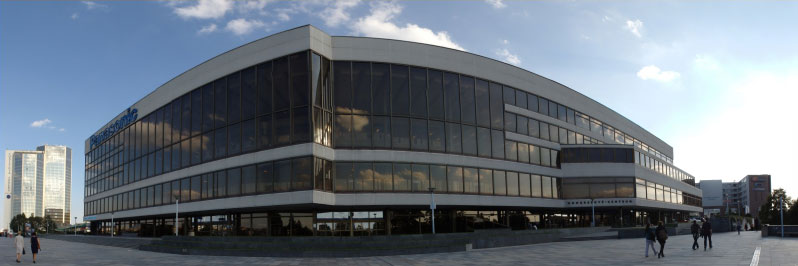
Prague Congress Centre (KCP)
5.května 65140 21 Prague 4
Czech Republic
Phone: +420 261 171 111
Website: www.kcp.cz