


Language Recovery In Aphasia Through Neuroscience
Aphasia can transform communication after stroke, traumatic brain injury, tumor, or neurodegenerative disease. A person may know what they want to say yet struggle to retrieve a word, construct a sentence, understand speech, or use language in social situations. Recovery therefore involves much more than restoring isolated vocabulary.
Neuroscientific advances have changed how clinicians understand this process. Language is supported by interacting networks that can reorganize after injury, while attention, memory, motor planning, emotion, and social context influence everyday communication. Research now connects brain mechanisms with therapies designed around meaningful participation.
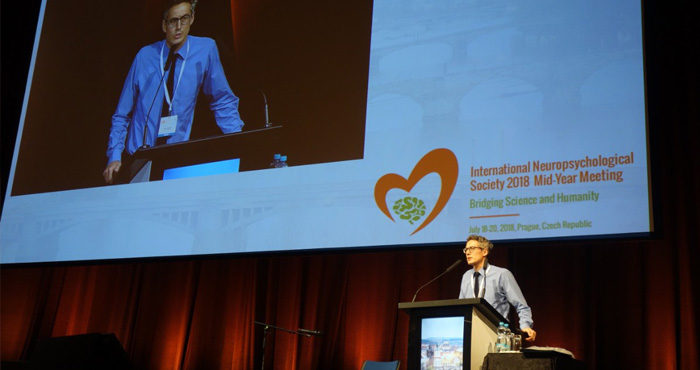
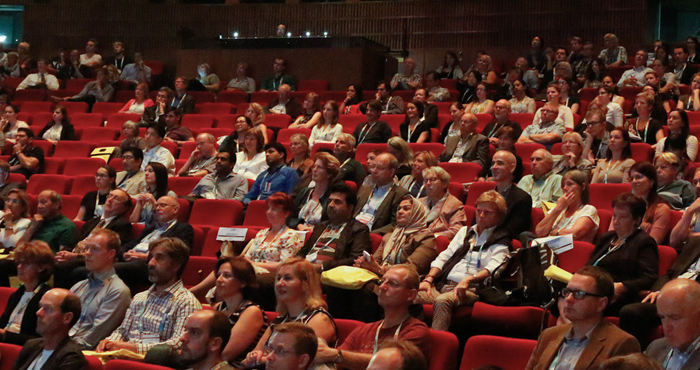
The International Neuropsychological Society mid-year meeting in Prague in 2018 reflected this bridge between laboratory findings and humane patient care. Its program, workshops, poster sessions, and clinical discussions created a useful setting for considering how evidence can guide aphasia rehabilitation across cultures and healthcare systems.
Mapping Language Loss Across The Brain
Older models often associated language with a few specialized cortical regions. Modern neuroimaging, lesion-symptom mapping, and connectivity studies provide a more nuanced picture. Speech production and comprehension depend on distributed pathways linking temporal, frontal, parietal, and subcortical structures.
The location and size of a lesion still matter, but they do not determine recovery alone. Remaining tissue, white-matter connections, premorbid abilities, treatment intensity, and general health can all affect outcomes. This explains why two people with apparently similar injuries may show very different communication profiles.
From Static Centers To Dynamic Networks
Recovery after aphasia can involve the reorganization of activity within the language-dominant hemisphere, support from neighboring regions, and carefully regulated contributions from the opposite hemisphere. Functional MRI, diffusion imaging, electroencephalography, and brain stimulation help researchers investigate these changes over time.
Such findings encourage clinicians to treat the brain as adaptable rather than fixed. However, increased activation is not automatically beneficial. Effective recovery depends on whether neural changes support accurate, efficient communication and whether they transfer from structured exercises to conversation, work, family life, and community participation.
A broader conference perspective, including the Prague meeting preview, helps place these scientific questions alongside cultural, clinical, and practical considerations.
Evidence That Shapes Rehabilitation
Language therapy can target naming, sentence formulation, comprehension, reading, writing, discourse, or conversational confidence. Approaches such as semantic feature analysis, constraint-induced language therapy, melodic intonation therapy, and technology-assisted practice are selected according to the individual’s impairment and goals.
| Neuroscientific focus | Clinical question | Possible rehabilitation response |
|---|---|---|
| Residual language networks | Which abilities remain accessible? | Build therapy around preserved comprehension, gestures, reading, or writing |
| White-matter connectivity | How well do regions communicate? | Use repeated, structured practice that strengthens efficient language pathways |
| Neural plasticity | When and how does the brain adapt? | Adjust intensity, timing, and task difficulty across recovery stages |
| Cognitive-linguistic interaction | Are attention or memory limiting performance? | Combine language treatment with strategies for executive and working-memory demands |
| Real-world generalization | Does improvement transfer beyond the clinic? | Practice personally relevant conversations and community activities |
Neuroscience is most useful when it sharpens clinical reasoning rather than replacing it. A promising biological marker must be interpreted alongside functional communication, fatigue, mood, family support, and the person’s own priorities.
Personalizing Treatment Across Patients
Aphasia rehabilitation is strongest when assessment identifies the person’s communication environment as well as their test scores. Someone may prioritize speaking with children, returning to professional writing, managing finances, participating in religious services, or using a telephone. These goals determine which improvements have practical value.
Cultural and linguistic background also shape assessment and treatment. Bilingual speakers may recover languages unevenly, and direct translation of an assessment can produce misleading results. Clinicians need culturally appropriate materials, interpreters when necessary, and sensitivity to family expectations about communication and independence.
The same principle applies to assistive communication. Writing, drawing, gesture, communication books, and speech-generating devices are not signs that recovery has failed. They can reduce frustration, support autonomy, and provide additional routes for expressing complex thoughts while spoken language continues to develop.
Designing Better Clinical Questions
Neuroscientific research raises important questions about dose, timing, and mechanism. How much therapy is enough? Which patients benefit from intensive schedules? Can stimulation, medication, or digital tools enhance behavioral treatment? Which neural measurements predict durable gains rather than short-term task performance?
Answering these questions requires coordinated research designs and clinically meaningful outcomes. Naming accuracy may improve without a corresponding change in conversation, while a modest test-score gain may greatly improve family interaction. Studies should therefore include discourse, participation, quality of life, and caregiver outcomes.
Professionals preparing for a scientific meeting can also benefit from reviewing workshop preparation guidance, especially when translating technical presentations into questions that can inform assessment and therapy.
Priorities For Clinical Practice
A humane approach keeps the person, rather than the damaged brain region, at the center of care. Clinicians can use neuroscientific evidence to select targets while remaining attentive to identity, relationships, fatigue, emotional wellbeing, and the right to participate in decisions.
Practical priorities include:
- Combine standardized testing with observation of real conversations and daily communication.
- Set goals around personally meaningful activities, not only impairment scores.
- Reassess treatment as attention, mobility, mood, and language abilities change.
- Include family members and communication partners in strategy training.
- Use technology and alternative communication methods to expand participation.
The field’s most valuable advances will connect precise brain science with flexible, compassionate rehabilitation. Continued collaboration among researchers, speech-language pathologists, neuropsychologists, physicians, patients, and families can turn findings about neural plasticity into communication opportunities that matter in ordinary life.
Explore the INS 2018 program and its record of scientific exchange to trace how neuropsychology brings laboratory discovery into clinical practice. The enduring goal is clear: help people with aphasia communicate more effectively, participate more fully, and recover in ways that respect their language, culture, and lived experience.
General Information
Important information about the meetingIndustry
Support and exhibition opportunitiesCzech Republic
Beautiful country situated in the very heart of EuropeContact
How can we help you?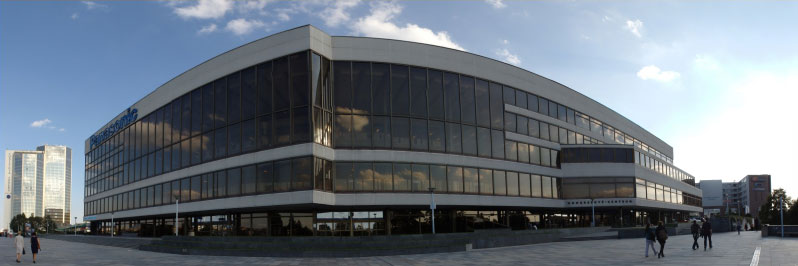
Prague Congress Centre (KCP)
5.května 65140 21 Prague 4
Czech Republic
Phone: +420 261 171 111
Website: www.kcp.cz