



Making Neuropsychological Assessment Travel Across Cultures
Neuropsychological tools are often designed within a specific language, education system, and social environment. When those instruments move across borders, direct translation cannot guarantee equivalent meaning. A familiar word, picture, memory strategy, or timed task may carry different levels of difficulty for people from different cultural backgrounds.
Language and cultural adaptation of neuropsychological tools therefore requires more than replacing one vocabulary with another. It involves examining how instructions are understood, how responses are shaped by experience, and whether scores remain clinically meaningful for the population being assessed.
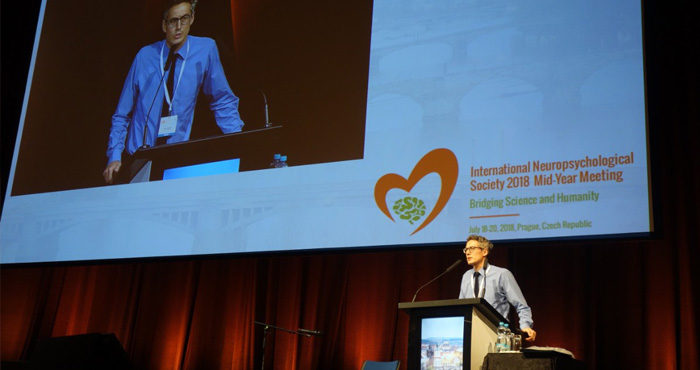
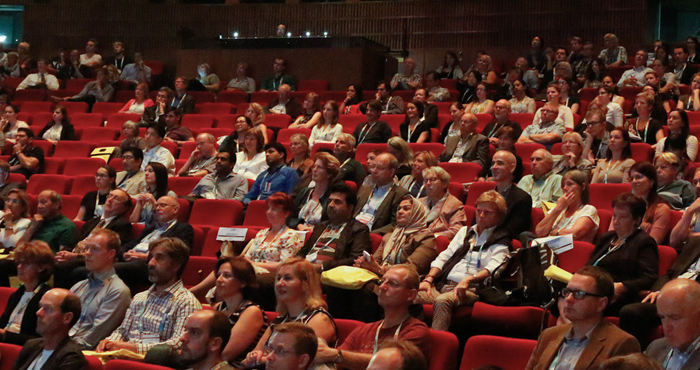
The 2018 International Neuropsychological Society mid-year meeting in Prague created a useful setting for connecting neuroscience, clinical practice, cultural awareness, and humane patient care. Its conference overview reflects the broad professional context in which these assessment questions were discussed.
Why Language Changes Test Meaning
Translation affects every stage of an assessment. Instructions may become longer or less direct, while words that appear simple in English may have several possible equivalents in another language. Verbal fluency tasks are particularly sensitive because performance depends on vocabulary structure, frequency of word use, and the rules governing categories.
Language also shapes how people explain symptoms and respond to clinicians. A patient may describe memory difficulty through culturally familiar expressions rather than clinical terms. If an examiner interprets those statements through a narrow linguistic lens, the resulting profile may confuse limited proficiency with cognitive impairment.
Beyond Literal Translation
A reliable adaptation process usually combines forward translation, independent back-translation, expert review, and pilot testing with members of the intended population. Each step exposes a different problem: inaccurate wording, altered difficulty, unfamiliar examples, or instructions that sound unnatural in everyday speech.
Expert review should include neuropsychologists, translators, linguists, and community representatives. Cognitive interviewing can then reveal what participants think each item means and which response strategies they use. This helps preserve conceptual equivalence rather than merely matching the original sentence word for word.
Building Culturally Fair Norms
Normative data determine how an individual score is interpreted, so they must reflect the population that will actually receive the assessment. Age, schooling, literacy, bilingual experience, migration history, and socioeconomic opportunity can all influence test performance without indicating neurological disease.
A culturally responsive norming study should describe its sample clearly and examine relevant demographic variables. Researchers also need enough participants across age and education bands to avoid unstable comparisons. A translated instrument without appropriate reference data may appear standardized while still producing misleading classifications.
| Assessment concern | Risk from weak adaptation | Stronger approach |
|---|---|---|
| Instructions | Confusion or inconsistent task demands | Linguistic review and comprehension testing |
| Test stimuli | Unfamiliar objects, names, or situations | Locally relevant and equivalent materials |
| Norms | False positives or missed impairment | Representative demographic sampling |
| Bilingual performance | Language proficiency mistaken for deficit | Assessment of language history and dominance |
| Clinical interpretation | Scores detached from lived context | Integration of interview, function, and culture |
Evidence Across Clinical Settings
Adapted tools should be evaluated for reliability, validity, sensitivity, and specificity in the setting where they will be used. A measure developed with healthy university students may perform differently in a memory clinic, rehabilitation service, rural practice, or multilingual hospital.
Cross-cultural validation also benefits from comparing test scores with daily functioning, informant reports, and neurological findings. Statistical equivalence is valuable, but it cannot replace clinical judgment. The purpose of adaptation is to improve decisions about care, capacity, rehabilitation, and support.
The Prague meeting’s institutional auspices point to the collaborative environment needed for this work. Professional organizations, universities, hospitals, and community partners each contribute expertise that a single research team may lack.
Practical Design Priorities
Researchers and clinicians can make adaptation more rigorous by treating culture as part of the measurement system rather than as background information.
- Define the construct before translating individual items.
- Record language proficiency, dominance, literacy, and education quality.
- Test instructions and stimuli with representative community members.
- Report sampling methods, demographic coverage, and limitations transparently.
- Combine scores with functional history and culturally informed clinical interviewing.
These priorities are especially important when assessments are used with immigrants, bilingual adults, Indigenous communities, or patients whose schooling differs substantially from the population in the original validation study. A respectful process can reduce avoidable bias while preserving the clinical purpose of the instrument.
From Conference Insight to Practice
The strongest neuropsychological assessment programs treat adaptation as an ongoing process. Feedback from patients and clinicians should inform revisions, while new studies should examine whether an instrument remains appropriate as language use, education, and migration patterns change.
This perspective connects technical measurement with humane care. Accurate assessment depends on recognizing the person behind the score, understanding the cultural setting behind the response, and communicating findings in language that patients and families can use.
Use the INS 2018 materials as a starting point for exploring how scientific advances, cultural considerations, and clinical practice can work together. Bring these principles into translation projects, validation studies, and everyday assessment decisions so that neuropsychological tools serve diverse communities with greater accuracy and respect.
General Information
Important information about the meetingIndustry
Support and exhibition opportunitiesCzech Republic
Beautiful country situated in the very heart of EuropeContact
How can we help you?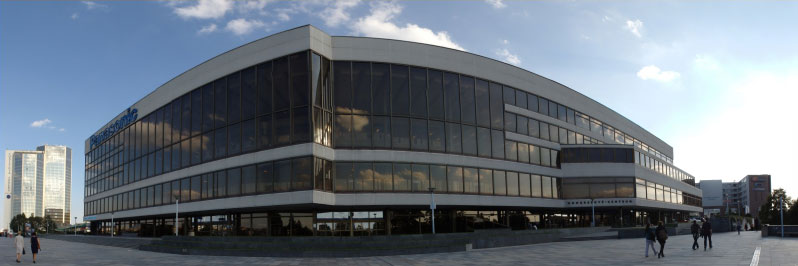
Prague Congress Centre (KCP)
5.května 65140 21 Prague 4
Czech Republic
Phone: +420 261 171 111
Website: www.kcp.cz