




The neuropsychological basis of social cognition in clinical care
Social cognition is the set of mental processes that helps people interpret other minds, understand social rules, recognize emotion, and choose responses in changing interpersonal situations. It connects perception, memory, language, executive control, motivation, and self-awareness rather than operating as an isolated brain function.
The neuropsychological basis of social cognition becomes especially visible when illness or injury disrupts everyday relationships. A person may remember facts and solve structured problems while missing sarcasm, misreading facial expressions, or failing to adjust behavior to another person’s needs. These difficulties can affect rehabilitation, employment, family life, and treatment adherence.
The subject also requires a humane and culturally informed approach. Social behavior is shaped by community expectations, language, development, education, and lived experience. Research and clinical practice are strongest when neural mechanisms are considered alongside the environments in which people communicate.
Why social cognition matters
Social understanding begins with the ability to identify relevant signals. Facial expression, tone of voice, posture, gaze, and conversational timing all provide information about another person’s intentions or emotional state. Attention determines which signals are noticed, while working memory helps hold them together long enough to form an interpretation.
Higher-level processes then support perspective-taking and mental-state attribution, often described as theory of mind. These abilities allow someone to distinguish a person’s beliefs from reality, understand indirect requests, and predict how knowledge or emotion may influence behavior. They are closely linked with executive functions such as inhibition, flexibility, and decision-making.
Brain systems behind interpersonal understanding
No single “social brain” region explains all social behavior. The amygdala contributes to emotional salience, the medial prefrontal cortex supports reflection on oneself and others, and the temporoparietal junction is involved in shifting perspective and representing beliefs. The anterior insula helps register internal emotional states, while the orbitofrontal cortex contributes to reward-based learning and socially appropriate choices.
These regions operate through distributed networks. The default mode network is active during self-reflection and mentalizing, while salience and executive networks help select meaningful information and regulate responses. White-matter connections, neurotransmitter systems, and developmental experience also influence how efficiently these networks coordinate.
Clinical patterns and assessment
Social-cognitive changes can follow traumatic brain injury, stroke, epilepsy, dementia, schizophrenia, autism, and neurodevelopmental conditions. In some cases, the main difficulty is emotion recognition; in others, it is sarcasm, empathy, impulse control, or the ability to infer another person’s intentions. A careful assessment separates these features from language impairment, reduced attention, depression, or unfamiliar cultural conventions.
Useful methods include structured interviews, informant reports, facial-emotion tasks, faux pas and sarcasm measures, affective perspective-taking exercises, and observation during interaction. Performance-based tests provide valuable detail, but real-world reports often reveal whether a deficit affects friendships, workplace communication, or independent living.
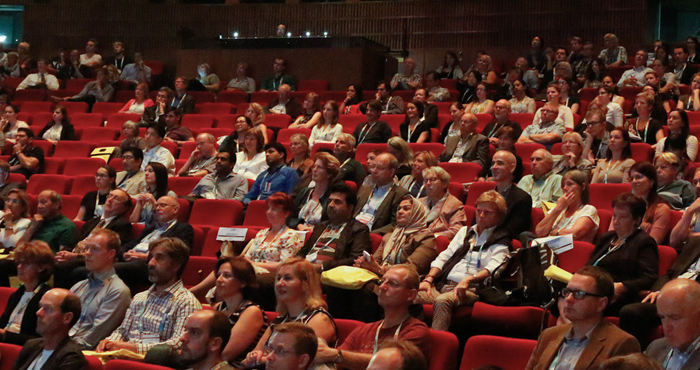
The clinical context of the 2018 International Neuropsychological Society meeting emphasized this bridge between scientific advances and compassionate care. Its conference background reflects a broader field concerned with neuroscience, clinical practice, cultural considerations, and the practical needs of patients.
Culture, development, and context
Social cognition is learned through relationships. Children gradually develop joint attention, emotional labeling, self-regulation, and an understanding that other people can hold different beliefs. Adolescence brings more complex peer reasoning and sensitivity to social evaluation, while later adulthood may involve changes in processing speed, emotion regulation, and social priorities.
Cultural context affects how social signals are expressed and interpreted. Eye contact, personal space, emotional display, politeness, and conversational directness vary across communities. A culturally responsive assessment therefore avoids treating one communication style as the universal standard and considers bilingualism, migration, socioeconomic conditions, and opportunities for social participation.
A working map of social-cognitive skills
The following distinctions can help clinicians and researchers describe a person’s profile without reducing social functioning to a single score.
| Domain | Core question | Possible difficulty |
|---|---|---|
| Emotion recognition | What is the other person feeling? | Misreading fear, anger, or disappointment |
| Perspective-taking | What does the other person know or believe? | Missing false beliefs or indirect meaning |
| Empathy | How does another person’s state affect my response? | Limited emotional resonance or concern |
| Social judgment | What response fits this situation? | Inappropriate disclosure or impulsive behavior |
| Self-monitoring | How is my behavior affecting others? | Failing to adjust tone, distance, or timing |
These domains overlap but should not be treated as interchangeable. Someone may recognize emotion accurately yet struggle to inhibit a blunt response. Another person may understand a social rule intellectually but fail to apply it under stress, fatigue, or sensory overload.
From laboratory findings to patient care
Intervention is most effective when it targets a specific mechanism and a meaningful daily activity. Training may involve emotion-labeling practice, role-play, video feedback, problem-solving, conversational repair, or strategies for checking assumptions before acting. Family education can make gains more durable by creating predictable and supportive communication environments.
Outcome measurement should include more than test scores. Clinicians can track participation, conflict frequency, treatment engagement, workplace performance, and the patient’s own goals. This broader view recognizes that social competence is relational: progress may depend on changes in both the individual and the surrounding environment.
Practical principles for responsible practice
- Combine standardized social-cognition measures with interviews, observation, and reports from trusted informants.
- Distinguish impaired mental-state reasoning from language, attention, mood, hearing, or cultural differences.
- Explain findings in functional terms, such as difficulty reading sarcasm or adjusting behavior during conflict.
- Build interventions around authentic relationships, daily routines, and communication goals.
- Reassess skills across settings because stress, fatigue, and unfamiliar groups can change performance.
Understanding how the brain supports interpersonal reasoning can sharpen diagnosis while preserving the person behind the profile. Explore the scientific and clinical resources associated with neuropsychology to connect research on social cognition with care that respects culture, dignity, and everyday human relationships.
General Information
Important information about the meetingIndustry
Support and exhibition opportunitiesCzech Republic
Beautiful country situated in the very heart of EuropeContact
How can we help you?
Prague Congress Centre (KCP)
5.května 65140 21 Prague 4
Czech Republic
Phone: +420 261 171 111
Website: www.kcp.cz