



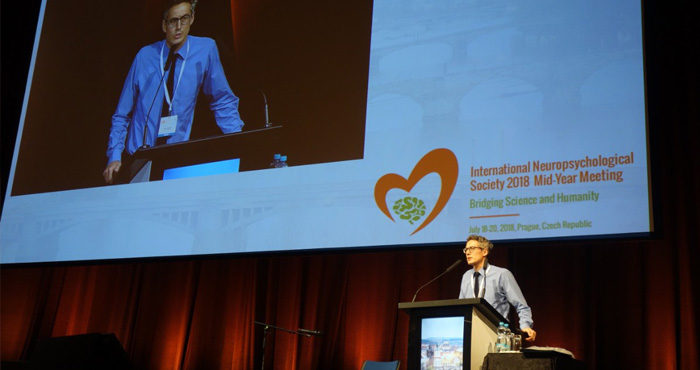
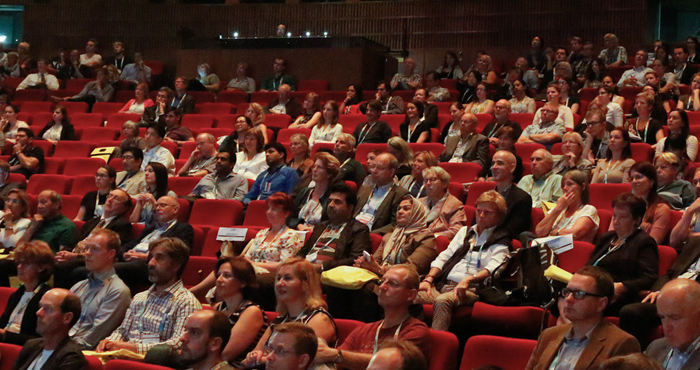

Presenting neuropsychology research at INS 2018
The International Neuropsychological Society mid-year meeting in Prague brought together researchers and clinicians interested in connecting scientific progress with humane patient care. A strong presentation therefore needed to do more than report results: it had to show why the findings mattered in real clinical settings.
How to Present Your Research at INS 2018 depended on the format, audience, and purpose of the work. Whether presenting a poster, speaking in a scientific session, or leading a continuing education workshop, presenters benefited from a clear narrative, disciplined visuals, and attention to cultural and clinical context.
The conference program covered neuroscience, assessment, rehabilitation, traumatic brain injury, and related areas of neuropsychology. That breadth made audience-focused communication especially important. A technically sophisticated project could still lose impact if its central message was difficult to identify.
Shape a focused research message
Begin by reducing the project to one central claim. State the research question, explain the method briefly, and show what the results add to existing knowledge. Avoid presenting every analysis with equal emphasis; select the findings that best support the main contribution.
A useful presentation structure is problem, approach, evidence, and implication. This sequence helps listeners follow the logic of the study without becoming lost in background detail. It also creates a natural transition from scientific findings to clinical relevance.
Your opening should establish why the topic deserves attention. A concise example from assessment, rehabilitation, or patient care can make an abstract research question more memorable, provided it respects confidentiality and does not replace the evidence.
Design visuals that support the evidence
Slides and posters should guide attention rather than reproduce a manuscript. Use informative headings, readable labels, and a restrained color palette. Every graph should answer a question, such as whether groups differed, whether an intervention changed performance, or how strongly variables were associated.
Keep statistical information accurate but accessible. Explain the meaning of confidence intervals, effect sizes, or interaction terms when they are essential to interpretation. A crowded figure can be divided into two simpler visuals, while a long paragraph can often become a short statement beside the relevant result.
For a poster, create a visible reading path from title to conclusion. Use whitespace to separate sections and position the key finding where visitors can see it quickly. Prepare a brief verbal summary for people who stop for only a minute, followed by deeper discussion for colleagues who want methodological detail.
Connect findings with humane clinical practice
INS 2018 emphasized the relationship between scientific advances and patient-centered care. Explain how your findings might influence assessment, diagnosis, rehabilitation planning, caregiver support, or communication with patients. Be specific about what could change and what remains uncertain.
Clinical implications should be proportional to the evidence. A small exploratory study may identify a promising direction without justifying a change in routine practice. Distinguish observed results from hypotheses, and identify limitations involving sample size, measurement tools, follow-up periods, or generalizability.
When discussing executive functioning after brain injury, for example, it helps to connect test performance with everyday behavior and participation. A useful background resource on executive dysfunction guide can help frame why apparently subtle cognitive changes may have significant practical consequences.
| Presentation element | Main purpose | Effective approach | Common risk |
|---|---|---|---|
| Research question | Establish relevance | Use one precise question | Starting with excessive background |
| Methods | Build confidence | Give only decision-relevant details | Listing procedures without rationale |
| Results | Demonstrate the evidence | Highlight patterns with clear figures | Overloading the audience with statistics |
| Clinical implications | Show practical value | Link findings to patient care | Making claims beyond the data |
| Discussion | Invite scholarly exchange | Acknowledge limits and alternatives | Treating questions as criticism |
Address culture and context
Neuropsychological performance is shaped by language, education, socioeconomic conditions, cultural expectations, and access to care. Explain how these factors were considered in recruitment, testing, interpretation, or intervention. If the sample was narrow, state clearly where the findings may not transfer.
Cultural sensitivity also affects presentation language. Avoid treating one assessment norm or communication style as universally valid. Describe whether instruments were translated, adapted, or validated for the population studied, and identify gaps that require further research.
This context is valuable for both clinical and scientific audiences. It demonstrates that rigor includes understanding the person behind the score, not merely obtaining a statistically significant result.
Rehearse delivery and discussion
Practice a version that fits the allotted time, then prepare a shorter explanation for informal conversations. Rehearsal should include transitions, pronunciation of technical terms, and a clear explanation of the most important figure. Record yourself if possible and listen for unnecessary repetition.
Anticipate questions about sample selection, missing data, alternative explanations, and clinical application. A strong response can acknowledge uncertainty while explaining what the study does establish. If a question falls outside the project, identify it as a valuable direction rather than improvising unsupported conclusions.
At the Prague meeting, discussion could continue beyond the formal session through poster visits and professional conversations. Bring a concise summary of your work, relevant references, and a way for interested colleagues to follow up after the event.
Practical recommendations for a stronger presentation
- State the central finding in one sentence before building the supporting detail.
- Match every chart, image, and statistic to a specific point in your argument.
- Explain limitations openly, especially those involving cultural validity and clinical generalization.
- Prepare separate summaries for a brief poster encounter and a full research discussion.
- End by identifying the next study, clinical application, or unanswered question supported by your evidence.
A successful INS 2018 presentation would leave colleagues with three things: a clear understanding of the research, confidence in the methods, and a realistic sense of its value for patients. Refine your message, rehearse the explanation, and use each conversation in Prague to connect rigorous neuropsychology with compassionate care.
General Information
Important information about the meetingIndustry
Support and exhibition opportunitiesCzech Republic
Beautiful country situated in the very heart of EuropeContact
How can we help you?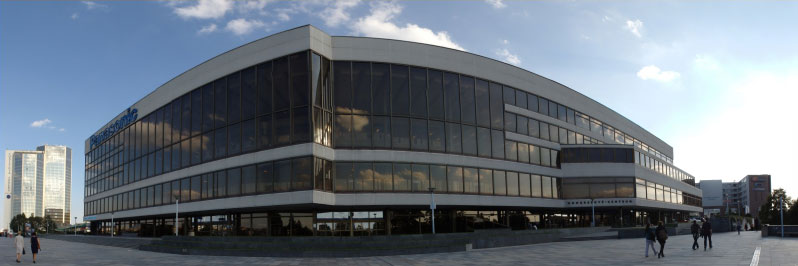
Prague Congress Centre (KCP)
5.května 65140 21 Prague 4
Czech Republic
Phone: +420 261 171 111
Website: www.kcp.cz