




Ethical Challenges in Cross-Cultural Neuropsychology
Neuropsychology increasingly works across borders, languages, and health systems. Cognitive assessments developed in one cultural setting may be used in another, while research findings travel rapidly from specialist laboratories into clinics serving diverse communities. This creates valuable opportunities, but it also raises difficult ethical questions about fairness, consent, interpretation, and clinical responsibility.
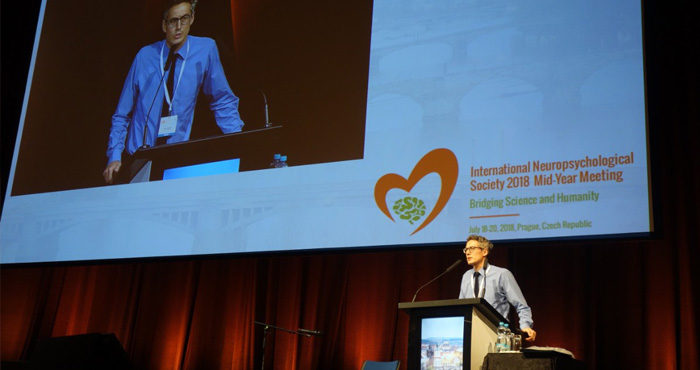
The 2018 International Neuropsychological Society mid-year meeting in Prague placed these concerns within a broader conversation about neuroscience, patient care, cultural responsiveness, and clinical practice. Its program, poster sessions, workshops, and professional discussions reflected a central principle: scientific progress has limited value if it does not respect the people and communities it is intended to serve.
Cultural context changes the clinical question
A neuropsychological score is never completely separate from the conditions in which it was produced. Education, language exposure, migration history, socioeconomic opportunity, family expectations, and familiarity with formal testing can all influence performance. Treating a culturally unfamiliar result as a direct measure of brain function may therefore lead to an inaccurate diagnosis.
Ethical practice requires clinicians to examine the assumptions behind a test before applying it. A low score might reflect acquired neurological impairment, limited literacy, unfamiliar instructions, anxiety, or the effects of interpreting questions in a second language. Cultural formulation should be part of assessment, rather than an afterthought added when results seem confusing.
Consent across languages and traditions
Informed consent involves more than translating a form. Patients need an understandable explanation of the purpose of an assessment, possible consequences, data handling, and their right to decline or withdraw. Professional interpreters may be essential, particularly when clinical terminology has no direct equivalent or when family members could influence what a patient feels able to say.
Researchers and clinicians must also recognize that decision-making traditions vary. Some patients expect relatives to participate in health choices, while others may avoid disagreement with medical professionals. Respecting these preferences does not remove the need to establish voluntary consent. It means creating a process in which personal autonomy and culturally meaningful support can coexist.
Evidence, measurement, and fairness
Cross-cultural neuropsychology faces a persistent measurement problem: a test can be reliable in one population and still lack validity in another. Norms based on a narrow sample may classify healthy people as impaired or conceal genuine difficulties. Ethical interpretation therefore depends on examining demographic variables, local educational patterns, translation quality, and the availability of appropriate comparison groups.
| Ethical concern | Potential harm | Responsible response |
|---|---|---|
| Imported test norms | Misdiagnosis or unequal access to services | Use local norms where possible and interpret cautiously |
| Literal translation | Confusion and distorted scores | Apply culturally adapted translation and back-translation |
| Interpreter involvement | Loss of nuance or confidentiality | Use trained interpreters and clarify roles |
| Limited research representation | Findings that exclude minority groups | Recruit diverse samples and report limitations |
| Algorithmic scoring | Hidden bias in automated decisions | Audit models and preserve professional oversight |
A culturally adapted instrument should be evaluated empirically, not accepted simply because its wording sounds natural. Transparency about uncertainty is an ethical strength. When evidence is limited, clinicians should combine test data with interviews, behavioral observations, medical history, and information from appropriate support networks.
From laboratory findings to humane care
Neuroscience can clarify mechanisms of memory, attention, executive function, and recovery, but biological explanations do not automatically determine the best care plan. Social stress, discrimination, displacement, poverty, and access to rehabilitation may shape outcomes as strongly as an individual neurological profile. Clinical decisions should therefore connect scientific evidence with the patient’s lived environment.
The lab-to-clinic perspective is especially important when findings are transferred between countries or populations. A promising experimental result may require different safeguards, communication methods, or treatment priorities in a community with limited services. Humane care means asking how evidence applies here, to this person, under these circumstances.
Practical safeguards for ethical practice
Cultural humility is a continuing professional discipline rather than a checklist of facts about particular groups. It encourages practitioners to identify their own assumptions, invite correction, and treat patients as knowledgeable sources about their identities and experiences. Teams can strengthen this approach through supervision, community consultation, and regular review of outcomes across demographic groups.
Useful safeguards include:
- Select instruments with evidence of cultural and linguistic validity.
- Explain uncertainty instead of presenting scores as definitive facts.
- Use qualified interpreters and protect confidentiality during interpreted sessions.
- Document education, language history, migration, and relevant social conditions.
- Review whether referrals, diagnoses, and treatments differ unfairly across groups.
These steps also support institutional accountability. Clinics and research centers should monitor who is excluded by eligibility rules, who receives follow-up care, and whether assessment results influence access to rehabilitation, education, employment, or legal support.
Prague and the shared responsibility of the field
A meeting devoted to connecting scientific advances with humane patient care provides a useful model for professional exchange. Presentations, posters, continuing education workshops, and informal discussions can bring together researchers, clinicians, students, and advocates whose experiences differ. That diversity is essential when ethical questions involve both technical validity and human dignity.
The Prague gathering also reflects why international neuropsychology needs sustained collaboration. No single country can establish universal norms for cognition, disability, or recovery. Researchers must share methods while remaining attentive to local meanings, clinical resources, and community priorities. Ethical cross-cultural work is built through partnership, transparency, and willingness to revise established practice.
Neuropsychologists can carry these principles into every assessment, study, and treatment decision. Review the evidence behind your measures, involve communities in adaptation, and make space for patients’ own accounts of their abilities and needs. That is how international scientific cooperation becomes fairer, more accurate, and genuinely useful in clinical life.
General Information
Important information about the meetingIndustry
Support and exhibition opportunitiesCzech Republic
Beautiful country situated in the very heart of EuropeContact
How can we help you?
Prague Congress Centre (KCP)
5.května 65140 21 Prague 4
Czech Republic
Phone: +420 261 171 111
Website: www.kcp.cz